Non-Formal Education, Research and Extension Cell at Begum Rokeya University, Rangpur (BNREC)
CIVIC Foundation is proud to support a landmark collaboration between Begum Rokeya University, Rangpur (BRUR) and a UNESCO-supported action research initiative. This partnership has led to the establishment of the Non-Formal Education, Research & Extension Cell (NREC) at BRUR—an innovative platform dedicated to lifelong learning, community development, and knowledge expansion.
Purpose
Begum Rokeya University, Rangpur was founded with a commitment to advancing human development in northern Bangladesh. Recognizing that non-formal education (NFE) plays a vital role in improving skills, livelihoods, and social inclusion, the university sought a structured approach to engage with communities beyond the classroom.
A UNESCO Dhaka–supported pilot project created the opportunity to bring academia and NFE practitioners together. Through this collaboration, BRUR aims to:
- Expand access to lifelong learning opportunities
- Strengthen community-based education systems
- Promote research-driven approaches to local socio-economic development
Background
As a public institution committed to advancing human knowledge, Begum Rokeya University, Rangpur was founded to uplift the marginalized populations of northern Bangladesh. The university recognizes the transformative potential of non-formal education (NFE)—a flexible learning system unrestricted by age or rigid curricula—and seeks to engage in initiatives that enhance community development.
A UNESCO Dhaka–supported pilot project implemented by RDRS Bangladesh opened a meaningful avenue for collaboration between BRUR and NFE stakeholders. The first consultative conference, held on 13 April 2014 with participation from the District BNFE Office, Rangpur District Administration, UNESCO Dhaka, NGO partners, and BRUR faculty, marked the beginning of this journey.
One major outcome of the meeting was the decision for BRUR faculty members to visit field-level NFE initiatives. Subsequently, university teachers visited five Community Learning Centers (CLCs) and three Union NFE Resource Centers (NRCs) to observe activities firsthand.
To strengthen understanding of global best practices, BRUR faculty expressed interest in learning from India’s university-based NFE models. In response, the District NFE Resource Team arranged a workshop featuring experts from the University of Kalyani, India—Dr. Ratneswar Bhattacharjee and Dr. Niladri Biswas. The Honorable Vice Chancellor of BRUR attended as Chief Guest. Their insights greatly contributed to shaping the emerging vision for NFE at the university.
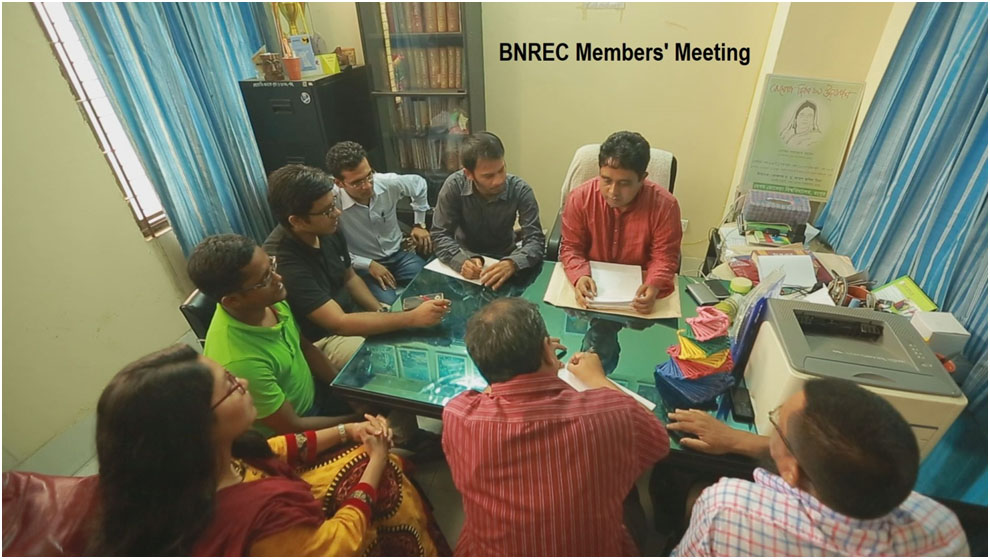
Following extensive discussions, the participants agreed to establish an experimental Non-Formal Education, Research & Extension Cell (NREC) at BRUR. The Cell formally commenced operations on November 3, 2015, and is operated by volunteer faculty members from multiple departments, under the guidance of an independent executive committee. The implementing NGO is also represented in the management structure to ensure coordinated implementation.
Role of CIVIC Foundation
In 2018, the District Administration entrusted CIVIC Foundation with supporting a sustainable NFE delivery mechanism in the region. Since then, CIVIC Foundation has been operating the BRUR NFE, Research & Extension Cell (BNREC) as the lead implementing organization, ensuring continuity, quality, and community impact.